


Depression can creep up on you; one day, you’re just worn out, and the next, simple things become much harder. Your usual activities fall apart, you lose your drive, and even small jobs seem overwhelming. This is where an Intensive Outpatient Program (IOP) can really help. It’s not a single weekly session, and it’s not a full-time hospital stay either. It’s a steady, supportive rhythm of care—multiple sessions per week—where you learn practical tools, use them right away in real life, and come back to adjust what’s working (and what isn’t) with a team that’s actually tracking your progress. In other words: less “talk about it,” more “build traction and keep it.”
Keep reading to learn more about the essential elements that make Intensive Outpatient Programs (IOPs) effective for treating depression, highlighting how structure, skill-building, support, and accountability drive real results.
The real reason IOP works: frequency + follow-through
 Weekly therapy can be helpful—but depression often needs more than a once-a-week reset. IOP works partly because it creates momentum: enough contact and repetition to keep you moving forward, even when your motivation is low.
Instead of spending six days trying to remember what helped, you’re practicing skills throughout the week and coming back quickly to refine what’s realistic for your life.
Ingredient #1: A framework that combats the “drift” caused by depression.
Depression flourishes when there’s no organization, days without plans, irregular sleep, missed meals, avoiding things, and being alone. Intensive Outpatient Programs (IOP) provide support by helping you create a dependable routine that you can stick to:
- Regular meetings each week (often multiple times per week
- Group sessions with people just like you, supporting each other
- Defined goals and assistance
- A steady pattern that lessens the exhaustion from making choices
The purpose is not to force you to be productive. Instead, it’s to establish an environment where your body can relax, and your mind can begin to regain steadiness.
Ingredient #2: Evidence-based therapy that’s practiced, not just discussed
Many effective depression IOPs use evidence-based approaches like CBT (Cognitive Behavioral Therapy) skills and DBT (Dialectical Behavior Therapy) skills (especially for emotion regulation, distress tolerance, and relationship patterns).
What makes IOP different is the built-in “practice loop”:
- Learn the skill
- Try it in real life (that same week)
- Come back and troubleshoot what got in the way
- Get group feedback and shared experiences
That repeat-and-adjust cycle is how skills become automatic—especially when depression is making everything feel heavy.
Ingredient #3: Support and accountability that reduces isolation
Depression isolates. It also convinces you you’re the only one who feels this way.
A well-run IOP group environment can help by:
- Breaking isolation in a structured, low-pressure way
- Normalizing symptoms without minimizing them
- Giving you accountability that doesn’t feel like judgment
For many people, it’s the first time they feel understood and supported with a plan—not just sympathy.
Ingredient #4: A team approach to care, not just one person’s effort.
Depression usually involves more than a single problem. Often, issues like sleep problems, worry, effects of trauma, exhaustion, difficulties in relationships, and job stress are all connected. IOP works well when it provides care that is planned together:
- A well-defined plan for treatment
- Regular checks on how things are going
- Changes to the plan if symptoms change
- Help with medicine when it’s right and needed by doctors
The main aim is straightforward: less confusion and fewer times feeling unsure of what to do next.
Ingredient #5: Checking your progress helps keep your treatment on track.
Since you have more frequent sessions, trends become clear more quickly:
“My mood gets worse every weekend.”
“I stay away from other people, which then makes me feel worse.”
“I’m doing the homework, but I’m not using it during conflict.”
IOP makes it less likely that your progress will secretly stop. It’s tougher for depression to hide behind saying, “I’m okay.”
Ingredient #6: Preventing future struggles is included from the start.
Getting better from depression usually isn’t a smooth path. A good Intensive Outpatient Program (IOP) makes preventing setbacks a main part of the treatment, not something thought of later:
- Finding out what causes problems and the early signs of trouble.
- Making plans to handle stress that you expect.
- Making healthy habits stronger (like good sleep, connecting with others, exercise, and setting limits).
- Creating a plan for what to do after finishing the IOP.
The goal isn’t to avoid ever having a bad day again. It’s good to know how to deal with it when it happens.
Research: what studies suggest about IOP-level care and depression outcomes
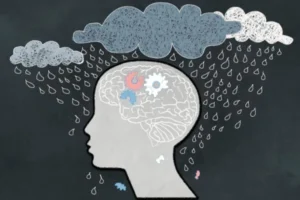 Many studies indicate that organized, skills-focused intensive outpatient programs, even those online, can help lessen the signs of depression.
- A study on remote intensive outpatient programs for young people showed that this method was helpful in treating depression in youth.
- A published study found that a specific type of therapy (DBT) in an intensive outpatient setting reduced depression and anxiety and boosted optimism.
- Research on programs that combine hospital and outpatient care with DBT therapy showed big drops in depression and anxiety and a rise in hope during treatment.
- A recent paper from 2024 reported that a national online intensive outpatient program for teenagers had good attendance and greatly reduced depression and related problems in its participants.
Practical takeaway: When the program is structured, skills-based, and frequent enough to create follow-through, IOP-level care can be a strong option for many people who are struggling with depression but can safely remain in their day-to-day environment.
Who tends to be a good fit for a depression IOP?
 IOP may be a strong fit if you:
- Need more support than weekly therapy provides
- Are you struggling with motivation, functioning, or consistency
- Want a structured program without inpatient care
- Are you dealing with depression plus anxiety, stress, trauma symptoms, or burnout
If safety is a concern (e.g., active suicidal intent, inability to stay safe, severe impairment), a higher level of care may be needed—an evaluation can help determine the right fit.
Virtual IOP vs in-person IOP: how to choose
Since Inward Health offers both, the best choice is usually the one you can attend consistently and fully.
Virtual IOP can be a great fit when:
- Transportation/time is a barrier
- You want to practice skills immediately at home/in real life
- Privacy and consistent attendance are realistic for your environment
In-person IOP can be a great fit when:
- Getting out of the home environment helps your mood
- You benefit more from a face-to-face connection
- Home distractions make it hard to engage fully
Both can be effective; what matters most is program quality, consistency, and whether the format matches your situation.
What you can expect from Inward Health, whether online or in person
 While each plan is tailored to each person, an intensive outpatient program (IOP) for depression generally involves:
- Several meetings each week on a set schedule.
- Therapy focused on learning new skills (often based on CBT/DBT).
- Group support plus individualized guidance
- Ongoing progress check-ins and treatment adjustments
- A practical plan for stepping down after IOP
If you’re considering IOP, the usual next step is a brief assessment to confirm fit and recommend the right level of care, then choose virtual or in-person based on what’s most realistic for you to stick with.
FAQs
How long does an IOP for depression last?
It varies, but many programs run for several weeks depending on needs and progress.
Can I work while doing IOP?
Often, yes—many IOPs offer day and/or evening schedules.
Is IOP covered by insurance?
Coverage varies by plan. Most people start by verifying benefits and eligibility.